What is Digital Marketing
Introduction (what is digital marketing)
Have you ever wondered how brands pop up everywhere — on Google, Instagram, or even your YouTube feed — just when you’re thinking about something you want?
That’s not magic. That’s digital marketing.
In today’s world, if your business isn’t online, it’s invisible. Whether you’re a student exploring a new career path or a business owner trying to grow, understanding digital marketing is your key to success.
Let’s break it down in simple words — what it really is, how it works, and why it’s the most powerful tool for success in 2025 and beyond.
What Is Digital Marketing?
What is Digital Marketing?
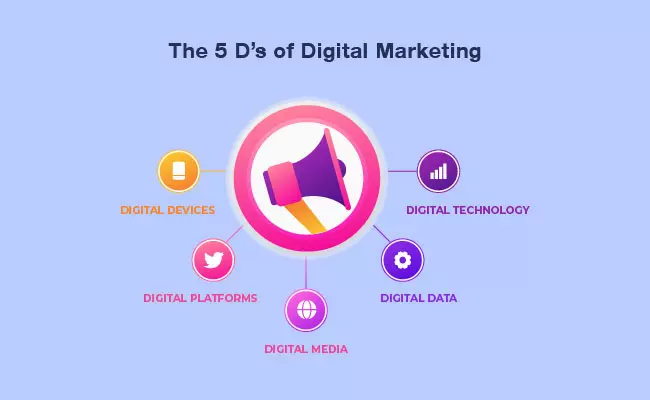
Digital marketing means promoting your business, product, or service using the internet or any electronic device.
In simple terms — it’s how brands connect with potential customers online through:
- Search engines like Google
- Social media platforms like Instagram, Facebook, and LinkedIn
- Email, websites, YouTube, and even mobile apps
Unlike traditional marketing (TV, radio, newspapers), digital marketing allows you to reach the right audience, measure results instantly, and spend smarter.
It’s all about being visible where your customers already are — online.
Why and what is Digital Marketing Matters in 2025
The world has gone digital — and there’s no turning back.
People spend over 7 hours a day online, and nearly every purchase starts with a Google search.
Here’s why digital marketing isn’t optional anymore:
- Targeted Reach: You can choose who sees your ads — age, location, interests, even online behavior.
- Cost-Effective: Digital ads cost a fraction of traditional marketing.
- Trackable Results: You can see exactly what works — no guessing.
- Better Engagement: It lets you interact with customers directly through comments, chats, and stories.
- Global Access: Even a small business in a small city can reach an international audience.
In 2025, businesses that don’t use digital marketing are simply leaving money on the table.
Types of Digital Marketing
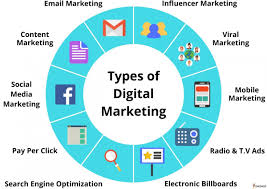
Digital marketing isn’t one single thing. It’s a mix of different strategies that work together to grow your presence online.
Let’s look at the key types:
Search Engine Optimization (SEO)
SEO is the art of ranking your website higher on Google. When someone searches “best coffee near me,” SEO helps your café appear first.
It involves keyword research, content optimization, backlinks, and user experience.
Content Marketing
This is about creating valuable content — blogs, videos, reels, or guides — that attract and educate your audience.
You’re reading one right now 😉
Social Media Marketing (SMM)
Platforms like Instagram, Facebook, LinkedIn, and TikTok are digital goldmines for audience engagement.
They help build brand awareness, trust, and loyal communities.
Pay-Per-Click Advertising (PPC)
Think of PPC as “buying visibility.”
You pay only when someone clicks your ad — like Google Ads or Meta Ads (Facebook + Instagram).
Email Marketing
Still one of the highest ROI channels.
Emails nurture leads, share updates, and convert potential customers into paying ones.
Affiliate Marketing
Promote someone else’s product and earn a commission. It’s a win-win for creators and brands.
Influencer Marketing
Collaborate with content creators who already have your target audience’s trust.
Video Marketing
Short videos, reels, and YouTube content are dominating 2025.
If you want attention — video is non-negotiable.
How Digital Marketing Works
Here’s how it flows:
- You identify your audience.
- You create valuable content — something that educates, entertains, or solves a problem.
- You promote it through SEO, ads, or social media.
- You analyze the results — who clicked, how long they stayed, what they liked.
- You refine your strategy to improve conversions.
It’s a loop of create → test → learn → optimize.
At Next Lancer, we use this exact cycle to help small businesses get visible online through powerful digital marketing solutions.
Benefits of Digital Marketing
- Reach a global audience instantly.
- Measure everything with tools like Google Analytics.
- Build long-term relationships with customers.
- Increase brand authority and visibility.
- Generate leads and sales 24/7.
In short — digital marketing helps you do more with less.
Digital Marketing for Beginners
If you’re new to this space — start small and stay consistent.
Here’s a simple 5-step roadmap:
- Learn the basics (SEO, social media, content, and ads).👉 Check out our full Beginner’s Guide to get started.
- Create a personal brand or blog.
- Experiment with free tools like Google Analytics, Canva, and Mailchimp.
- Focus on one platform first — like Instagram or YouTube.
- Stay consistent — results take time, but they come.
Remember — every expert marketer was once a beginner who started.
Real-Life Example
Let’s say you run a small bakery.
Instead of waiting for walk-ins, you start posting cake videos on Instagram, run a local ad campaign, and create a Google My Business profile.
Soon, people nearby start discovering your shop online — orders increase, and your brand grows.
That’s the magic of digital marketing — visibility creates opportunity.
Future of Digital Marketing in 2025
AI, automation, and data-driven insights are shaping the future.
But the core idea remains: connect with people through value.
In 2025, success in digital marketing will depend on how well you combine creativity + analytics + human touch.
Trends to watch:
- Voice search optimization
- Short-form video content
- AI chatbots and personalization
- Data privacy and ethical marketing
At its core, what is digital marketing has always been about leveraging digital channels to promote products and services. This includes a wide array of strategies such as search engine optimization (SEO), content creation, social media, and email campaigns. However, the future of this field is inextricably linked with Artificial Intelligence (AI).
AI is no longer a futuristic concept but a present-day reality that is automating and enhancing marketing efforts. AI-powered tools can analyze vast datasets to predict consumer behavior, enabling marketers to make data-driven decisions with unprecedented accuracy. This technology is also personalizing content at scale, from crafting unique email subject lines to dynamically adjusting website content for individual users.
In the coming years, expect AI to play an even larger role in:
- Hyper-Personalization: Moving beyond basic personalization, AI will enable hyper-personalization, where marketing messages are tailored to an individual’s real-time needs and context.
- Predictive Analytics: AI algorithms will forecast future trends and customer actions, allowing marketers to be more proactive in their strategies.
- Content Generation: While human creativity remains crucial, AI will assist in generating initial drafts of blog posts, social media updates, and even video scripts, significantly speeding up the content creation process.
The Rise of Immersive and Conversational Marketing
The future of digital marketing is not confined to screens. Immersive technologies like Augmented Reality (AR) and Virtual Reality (VR) are set to become mainstream, offering new avenues for customer engagement. Imagine virtual try-ons for clothing, AR-powered product demonstrations in your living room, or branded experiences within the burgeoning metaverse. These technologies will bridge the gap between the digital and physical worlds, creating memorable and interactive brand experiences.
Simultaneously, the way we search for information is becoming more conversational. The increasing adoption of voice search through smart speakers and digital assistants is compelling marketers to shift their SEO strategies. Instead of focusing solely on keywords, the emphasis will be on creating content that answers questions in a natural, conversational tone.
Navigating a Privacy-Centric Landscape
As consumers become more conscious of their digital footprint, privacy is taking center stage. The phasing out of third-party cookies and the implementation of stricter data protection regulations are forcing a fundamental shift in how marketers collect and use data.
In this new era, first-party data—information collected directly from customers with their consent—will be the most valuable asset. Building trust through transparency and offering genuine value in exchange for data will be paramount. This move towards a privacy-first approach will also see a resurgence in contextual advertising, where ads are placed based on the content of a webpage rather than on user behavior tracking.
The Enduring Importance of Community and Authenticity
While technology continues to advance, the human element of marketing is becoming more important than ever. The future of digital marketing will see a greater emphasis on building genuine connections and fostering a sense of community. This involves:
- Social Commerce: The seamless integration of e-commerce within social media platforms will continue to grow, making the path from discovery to purchase shorter and more intuitive.
- Influencer Marketing: A shift towards micro-influencers with smaller, more engaged audiences will allow for more authentic and relatable brand collaborations.
- Sustainability and Social Responsibility: Consumers are increasingly aligning with brands that share their values. Marketing campaigns that highlight a commitment to environmental and social causes will resonate more deeply with audiences
FAQs — Quick Answers for Beginners
Q1. What is digital marketing?
It’s the process of promoting products or services using online channels like search engines, social media, and emails.
Q2. Is digital marketing easy to learn?
Yes! With the right resources and practice, anyone can learn it — even without a tech background.
Q3. How do I start digital marketing as a beginner?
Start by understanding SEO, social media, and content creation.
Then apply your skills practically — build your own blog or small project.
Q4. Does digital marketing really work for small businesses?
Absolutely! Even with a small budget, you can target your exact audience and track every rupee spent.
Conclusion
Digital marketing isn’t just about ads — it’s about building real connections online.
Whether you’re a beginner, freelancer, or business owner, learning digital marketing in 2025 is one of the smartest decisions you can make.
And if you ever need expert help turning strategy into success, Next Lancer is here to help with professional digital marketing solutions.